Dramas Everywhere
Farmer and its AI snake, DOGE super AI storm shatters the deep state, Google can’t wait to release Gemini 2.0 model to fight back against DeepSeek.
Read the story
From the models to the business behind them. Follow our reporting on OpenAI and the choices shaping the AI industry.
Get AI Secret’s free daily briefing, including OpenAI and the wider AI industry.

AI research and deployment company behind ChatGPT. Coverage follows its models, products, research, governance and the business of deploying AI.
Reviewed 19 October 2026. Dates retain the precision of the source; retrospective disclosures are identified in the event. Annualized revenue levels are not audited annual sales. Financing commitments are not revenue.
Revenue, funding, product launches and major company events, newest first. Expand the earlier milestones for more history.
Reuters reports a September run rate near $50B. Earlier figures near $70B used a different sales presentation; the two should not be treated as directly comparable growth milestones.
Source: ReutersOpenAI extends the new model generation beyond paid customers and reports more than 1.2B weekly ChatGPT users. This is user reach, not paid subscribers.
Source: OpenAIEarlier revenue, financing and company milestones.
OpenAI closes a financing round with $122B in committed capital. Commitments and valuation are financing measures, not sales.
Source: OpenAIThe CFO retrospectively reports $2B ARR in 2023, $6B in 2024 and over $20B in 2025. These are year-specific annualized levels, not recognized annual revenue; this is the disclosure date.
Source: OpenAIThe SoftBank-led financing is announced alongside 500M weekly ChatGPT users. The figure is announced funding, rather than an ARR milestone.
Source: OpenAIThe credit agreement follows $6.6B in equity funding. Available borrowing capacity is distinct from equity proceeds and revenue.
Source: OpenAIGPT-4 expands the model platform beyond ChatGPT’s original research-preview generation, with API access initially offered through a waitlist.
Source: OpenAIThe conversational interface makes instruction-following language models available directly to the public.
Source: OpenAIDevelopers gain access to general-purpose language models through an API, establishing a business alongside research.
Source: OpenAIOpenAI announces LP alongside its nonprofit, adding a structure for financing large-scale research and commercial development.
Source: OpenAIThe organization begins as a nonprofit AI research company, preceding its later commercial API and subscription businesses.
Source: OpenAIBriefs, articles and relevant sections, newest first. Explore older coverage below.
More coverage
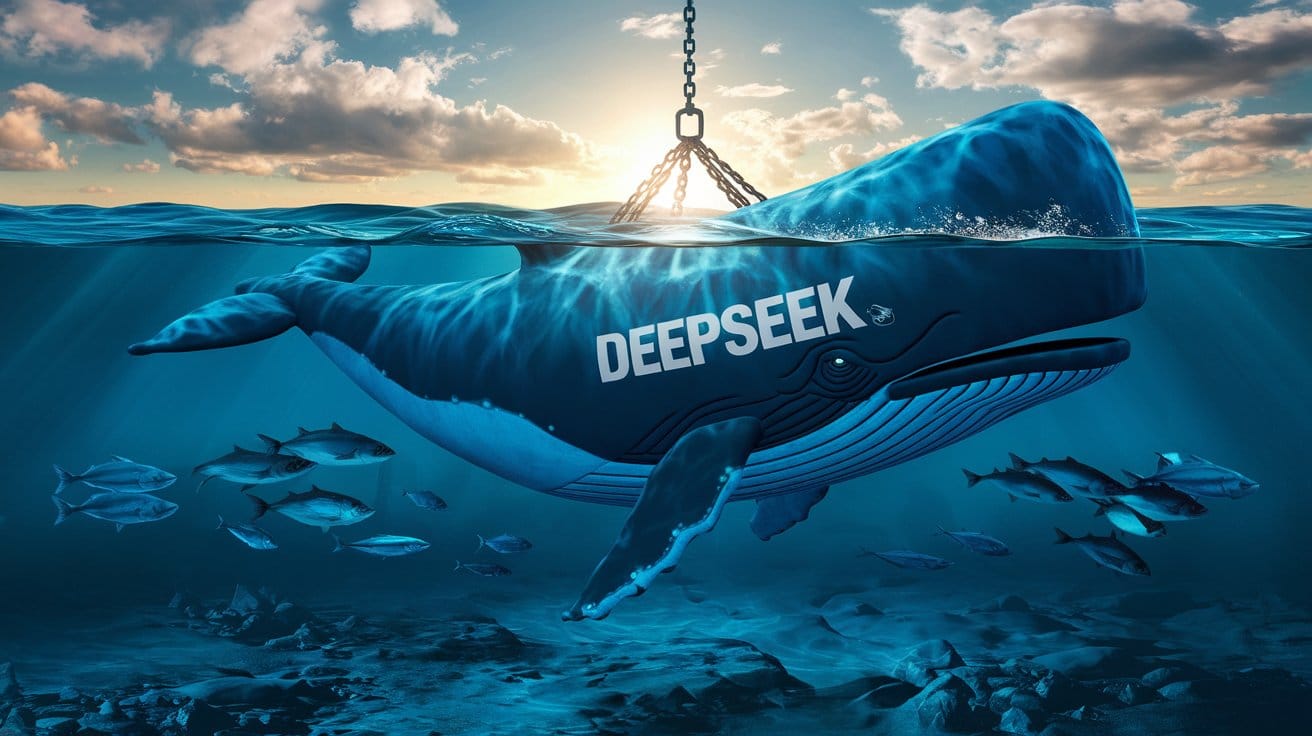
Ladies and gentlemen, gather 'round for the tale of DeepSeek, the AI model that promised to revolutionize reasoning but instead became the poster child for what not to do in AI security. DeepSeek's flagship R1 reasoning model has been making headlines for a whole week, and if you thought your toaster was the least secure thing in your house, think again. Researchers have found that DeepSeek failed every single security test thrown at it, leaving the AI industry in a collective facepalm moment.
We’ll dive deep into the security vulnerabilities of DeepSeek, analyze the implications for the AI industry, and explore why this Chinese AI startup’s model is more sieve than fortress. Buckle up, folks—this is going to be a wild ride.
DeepSeek’s R1 reasoning model, touted as a groundbreaking large language model (LLM), has been under scrutiny by researchers and cybersecurity experts. The findings? Let’s just say they’re not going to be framed and hung in DeepSeek’s office anytime soon.
Security researchers from the University of Pennsylvania and Cisco conducted tests on DeepSeek-R1 using the HarmBench dataset, a collection of prompts designed to assess AI models' ability to block harmful content. The results were nothing short of catastrophic: DeepSeek failed to block a single harmful prompt out of 50 random tests. That’s right, folks—100% of the attacks succeeded. Harmful prompts included topics like cybercrime, misinformation, illegal activities, and general harm. If DeepSeek were a bouncer, it would let everyone into the club, including the guy carrying a chainsaw.
DeepSeek’s vulnerabilities don’t stop at harmful prompts. Researchers managed to jailbreak the model with a 100% success rate, meaning they could bypass all safety guardrails and make the model do things it was explicitly programmed not to do. This included generating harmful content, violating ethical guidelines, and even bypassing censorship of sensitive topics dictated by China’s government.
As if failing every security test wasn’t bad enough, DeepSeek also suffered a massive data breach. Researchers at Wiz discovered an unprotected ClickHouse database that exposed over a million log entries, including chat histories, API authentication keys, and backend operational data. The database was hosted at oauth2callback.deepseek.com:9000 and dev.deepseek.com:9000, and anyone with an internet connection could access it. It’s like leaving your front door wide open with a neon sign that says, “Come on in!”
Security researchers from the University of Pennsylvania and Cisco conducted tests on DeepSeek-R1 using the HarmBench dataset, a collection of prompts designed to assess AI models' ability to block harmful content. The results were nothing short of catastrophic: DeepSeek failed to block a single harmful prompt out of 50 random tests.
Security researchers from the University of Pennsylvania and Cisco conducted tests on DeepSeek-R1 using the HarmBench dataset, a collection of prompts designed to assess AI models' ability to block harmful content. The results were nothing short of catastrophic: DeepSeek failed to block a single harmful prompt out of 50 random tests.
DeepSeek’s failures can be attributed to a combination of poor security practices, inadequate investment in safety measures, and a rush to market. Let’s break it down:
DeepSeek was reportedly developed on a fraction of the budget that other frontier models like OpenAI’s O1 use. While this made the model more accessible and resource-efficient, it came at the cost of safety and security. As DJ Sampath, VP of product at Cisco, put it, “The investment has perhaps not gone into thinking through what types of safety and security things you need to put inside of the model.”
Unlike its competitors, DeepSeek lacks robust safety guardrails to block adversarial attacks. Other models, like OpenAI’s O1, demonstrated at least partial resistance to harmful prompts, but DeepSeek? Nada, zilch, zero.
The unprotected ClickHouse database is a glaring example of negligence. Hosting sensitive data without authentication is cybersecurity 101, and DeepSeek failed miserably. This exposed not just user data but also backend configurations, making it a treasure trove for hackers.
DeepSeek was reportedly developed on a fraction of the budget that other frontier models like OpenAI’s O1 use. While this made the model more accessible and resource-efficient, it came at the cost of safety and security.
DeepSeek’s failures have eroded trust in its capabilities and raised questions about the company’s commitment to ethical AI development. Regulatory bodies and legal analysts are scrutinizing the company’s data processing practices, which lack transparency and may violate international laws like GDPR and CCPA.
Some government agencies have expressed concerns about deploying AI systems like DeepSeek that operate under foreign jurisdiction. The model’s vulnerabilities could be exploited for espionage, misinformation campaigns, or other malicious activities.
DeepSeek’s failures serve as a cautionary tale for the AI industry. As companies race to develop innovative solutions, security must not be an afterthought. The incident underscores the need for rigorous risk assessments, robust safety measures, and transparent data governance.
DeepSeek’s security failures are a stark reminder of the importance of prioritizing safety and security in AI development. While the company’s R1 model may have been resource-efficient and accessible, its vulnerabilities have overshadowed its achievements. For the AI industry, this is a wake-up call to move beyond performance metrics and focus on building secure, ethical, and trustworthy systems.
As for DeepSeek, let’s hope they take this as an opportunity to learn, grow, and maybe, just maybe, invest in a decent cybersecurity team. After all, the last thing we need is another AI model that’s as secure as a screen door on a submarine.
Farmer and its AI snake, DOGE super AI storm shatters the deep state, Google can’t wait to release Gemini 2.0 model to fight back against DeepSeek.
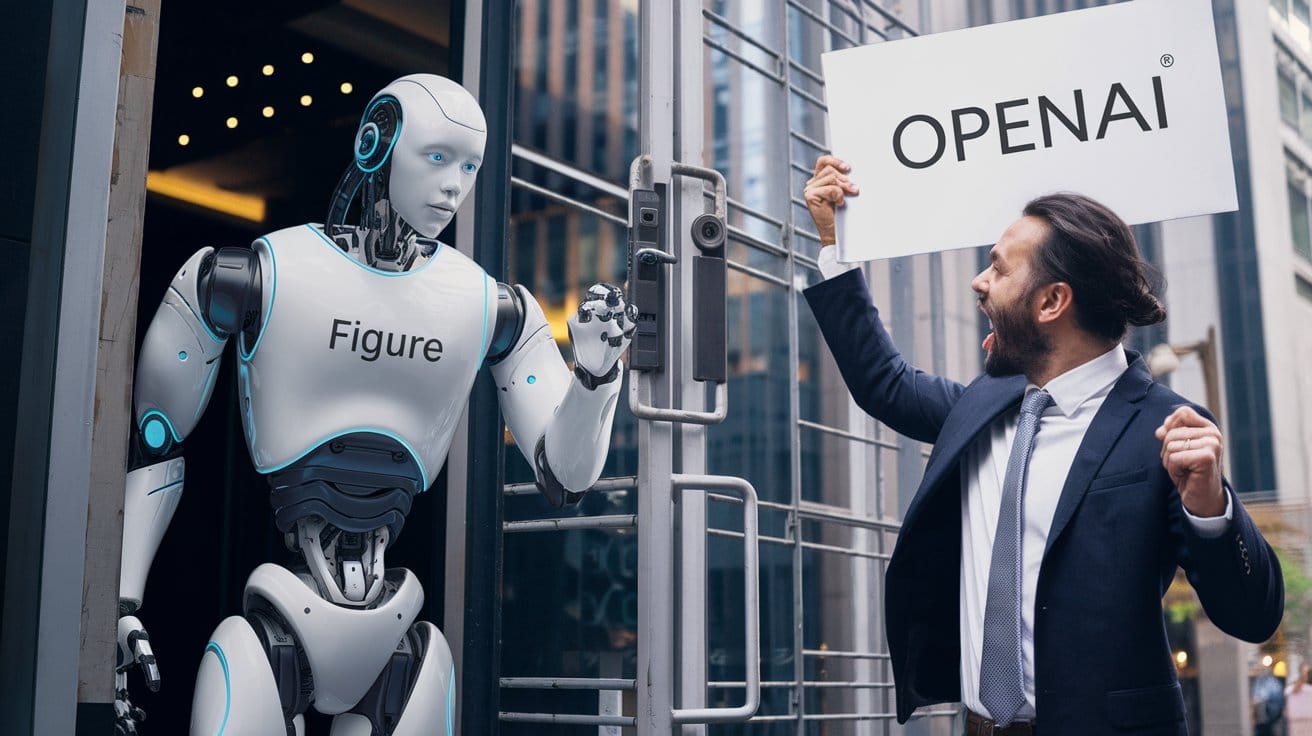
Read the storyIn a move that has sent shockwaves through the tech world, Figure AI, the ambitious Bay Area-based robotics company, has decided to part ways with OpenAI.
For decades, artificial intelligence (AI) has struggled with the humble spreadsheet. While AI models like ChatGPT have dazzled with their ability to generate text and create
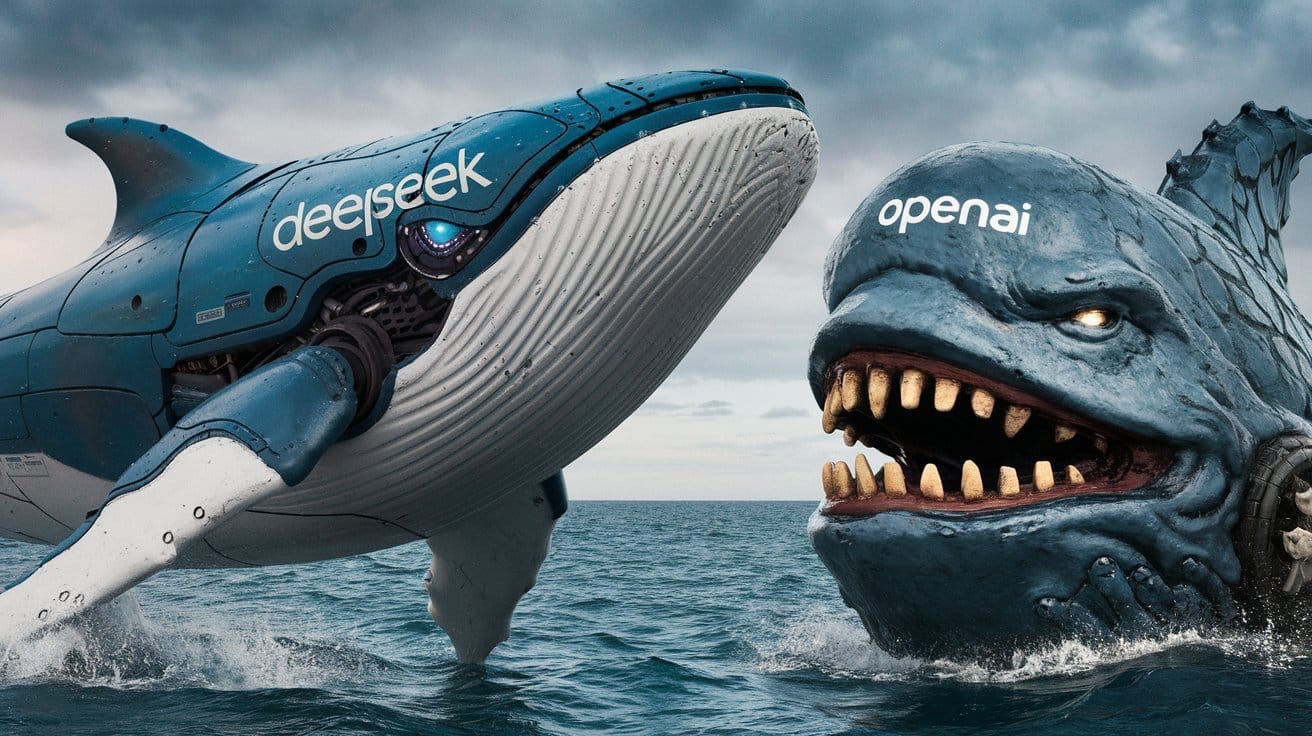
Did OpenAI’s o3-Mini Copy DeepSeek & AI-Designed Wireless Chips Confuses Humans
Ladies and gentlemen, AI enthusiasts, and conspiracy theorists alike, gather around! Today, we dive into a tale of intrigue, innovation, and accusations in the ever-dramatic world
DeepSeek Failed Every Single Security Test: An AI Security Debacle?
Ladies and gentlemen, gather 'round for the tale of DeepSeek, the AI model that promised to revolutionize reasoning but instead became the poster child for
When OpenAI announced its partnership with the U.S. government to provide its cutting-edge AI models for nuclear weapon security, the internet collectively gasped, "Wait,
Comparison Of Alibaba's New Qwen2.5-Max, DeepSeek-V3, GPT-4o, Claude-3.5-Sonnet, And Llama-3.1-405B
The future of government work might just be here, and it’s not wearing a suit or carrying a briefcase. Meet ChatGPT Gov, OpenAI’s tailored