Illusions of Intelligence
An AI research agent can effectively solve the problem of AI hallucinations.
Read the story
From the models to the business behind them. Follow our reporting on OpenAI and the choices shaping the AI industry.
Get AI Secret’s free daily briefing, including OpenAI and the wider AI industry.

AI research and deployment company behind ChatGPT. Coverage follows its models, products, research, governance and the business of deploying AI.
Reviewed 19 October 2026. Dates retain the precision of the source; retrospective disclosures are identified in the event. Annualized revenue levels are not audited annual sales. Financing commitments are not revenue.
Revenue, funding, product launches and major company events, newest first. Expand the earlier milestones for more history.
Reuters reports a September run rate near $50B. Earlier figures near $70B used a different sales presentation; the two should not be treated as directly comparable growth milestones.
Source: ReutersOpenAI extends the new model generation beyond paid customers and reports more than 1.2B weekly ChatGPT users. This is user reach, not paid subscribers.
Source: OpenAIEarlier revenue, financing and company milestones.
OpenAI closes a financing round with $122B in committed capital. Commitments and valuation are financing measures, not sales.
Source: OpenAIThe CFO retrospectively reports $2B ARR in 2023, $6B in 2024 and over $20B in 2025. These are year-specific annualized levels, not recognized annual revenue; this is the disclosure date.
Source: OpenAIThe SoftBank-led financing is announced alongside 500M weekly ChatGPT users. The figure is announced funding, rather than an ARR milestone.
Source: OpenAIThe credit agreement follows $6.6B in equity funding. Available borrowing capacity is distinct from equity proceeds and revenue.
Source: OpenAIGPT-4 expands the model platform beyond ChatGPT’s original research-preview generation, with API access initially offered through a waitlist.
Source: OpenAIThe conversational interface makes instruction-following language models available directly to the public.
Source: OpenAIDevelopers gain access to general-purpose language models through an API, establishing a business alongside research.
Source: OpenAIOpenAI announces LP alongside its nonprofit, adding a structure for financing large-scale research and commercial development.
Source: OpenAIThe organization begins as a nonprofit AI research company, preceding its later commercial API and subscription businesses.
Source: OpenAIBriefs, articles and relevant sections, newest first. Explore older coverage below.
More coverage
In the rapidly evolving landscape of artificial intelligence, the emergence of AI agents—autonomous systems capable of performing complex tasks—has marked a transformative era for research, content creation, and knowledge management. Among these, CopyOwl positions itself as the first AI Research Agent, promising Deep Research on any topic in a single click, delivering high-quality, fully-cited articles, and fundamentally changing how individuals and organizations approach research and writing.
AI agents are autonomous systems that leverage advanced machine learning, natural language processing (NLP), and reasoning capabilities to perform tasks on behalf of users. Unlike traditional AI models, which respond passively to prompts, agentic AI proactively plans, executes, and adapts to achieve user-defined goals. They can break down complex tasks, call external tools, and even collaborate with human teams.
2025 is widely regarded as the “year of the AI agent,” with both proprietary and open-source solutions proliferating across industries. Major trends include:
Deep research agents represent a leap beyond simple question-answering bots. They autonomously conduct comprehensive research, including:
The market features both proprietary and open-source deep research agents. Notable examples include:
| Agent Name | Key Features | Output Style |
|---|---|---|
| OpenAI Deep Research Agent | Multi-step reasoning, web browsing, citations | Long-form, detailed, structured |
| Google Gemini Deep Research | Cloud integration, trend analysis | Summaries, briefing-style |
| Perplexity Deep Research | Conversational UI, real-time web search | Concise, conversational |
| OpenDeepResearcher (OSS) | Local deployment, privacy-focused, highly customizable | Markdown, customizable templates |
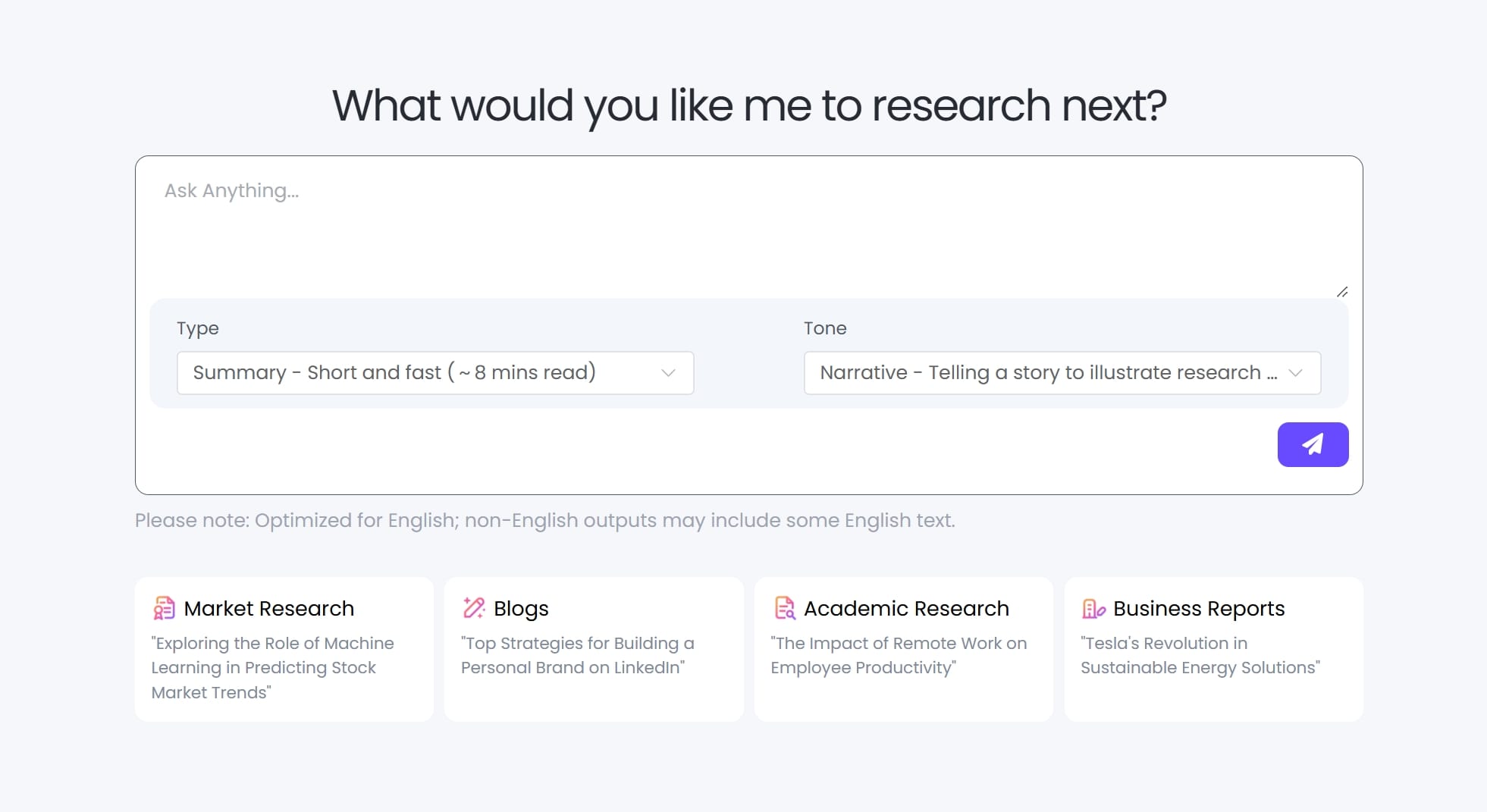
| CopyOwl | One-click research, full citations, tailored outputs | In-depth, fully cited, versatile |
CopyOwl brands itself as the first AI Research Agent, offering deep research on any topic in one click. Its workflow is designed for maximum simplicity and efficiency:
Recent industry benchmarks (e.g., GAIA, HLE) show that deep research agents are approaching human-level reasoning on complex, multi-step tasks. For example, OpenAI’s Deep Research agent achieved 72–73% accuracy on GAIA, compared to 63–67% for prior top agents. Open-source alternatives are closing the gap, with HuggingFace’s implementation reaching 55.15% on GAIA.
CopyOwl’s proprietary performance data highlights:
While direct, third-party benchmarks for CopyOwl are not yet published, user testimonials and adoption metrics indicate strong real-world impact.
CopyOwl stands out for its:
Compared to open-source agents, which require technical setup and may lack polish, CopyOwl offers a turn-key, user-friendly experience—critical for mainstream adoption.
Based on the evidence, CopyOwl’s claim to be the first AI Research Agent is credible in the sense of offering a fully-integrated, one-click solution for deep research and content generation. Its focus on user experience, citation integrity, and versatility sets it apart from both earlier AI writing tools and more technical open-source research agents.
CopyOwl’s impact is measurable: thousands of users, high satisfaction, and significant time savings. Its ecosystem of free tools further cements its position as a leader in AI-powered productivity.
The AI agent and deep research industry is undergoing a profound transformation. CopyOwl, as the first AI Research Agent, exemplifies the potential of autonomous systems to revolutionize how we conduct research, write, and create knowledge. Its one-click, fully-cited, and highly customizable outputs address the core pain points of modern researchers, students, and professionals.
While challenges remain—especially around critical oversight, benchmarking, and privacy—CopyOwl’s leadership is both real and significant. Its user-centric design, robust citation practices, and expanding tool ecosystem make it a model for the future of AI-powered research. As the industry continues to evolve, CopyOwl’s approach offers a blueprint for balancing automation with human judgment, efficiency with rigor, and innovation with trust.
An AI research agent can effectively solve the problem of AI hallucinations.
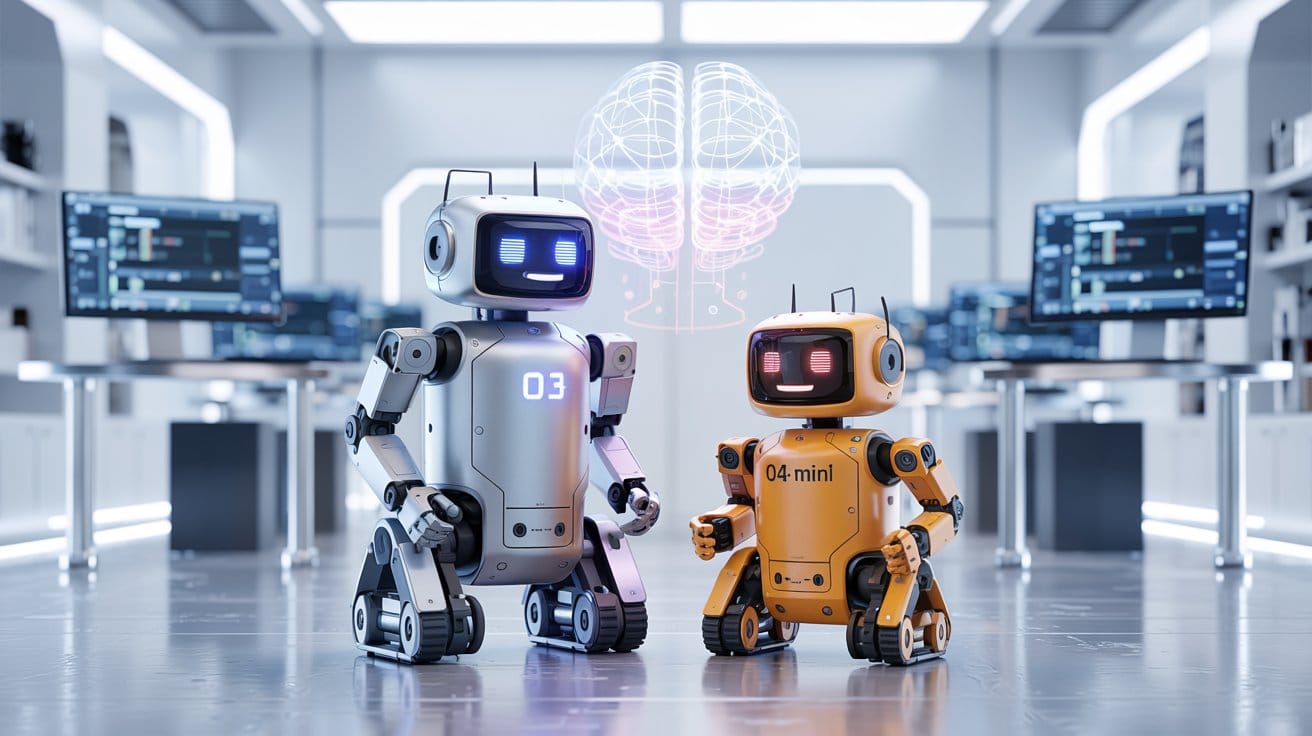
Read the storyIn April 2025, OpenAI’s release of its latest reasoning models, o3 and o4-mini, was met with both excitement and concern. While these models promised state-of-the-art
In the rapidly evolving landscape of artificial intelligence, the emergence of AI agents—autonomous systems capable of performing complex tasks—has marked a transformative era for
OpenAI Unveils o3 and o4-mini: Advanced AI Models Capable of Visual Reasoning
The Trump administration is reportedly considering imposing significant restrictions on the Chinese artificial intelligence (AI) startup DeepSeek, citing national security concerns. These potential measures include barring
This week, OpenAI announced the release of its latest AI models, o3 and o4-mini, marking a significant leap in artificial intelligence capabilities. These models are designed
In a move that could redefine the social media landscape, OpenAI, the artificial intelligence (AI) powerhouse behind ChatGPT, is reportedly developing a social media platform akin
Debates Over AI Benchmarking Have Reached Pokémon
Mark Zuckerberg Defends Meta in FTC Antitrust Lawsuit
The artificial intelligence (AI) landscape is evolving rapidly, with major players like Google, OpenAI, and Anthropic driving innovation in the field. In a significant development, these