Reviewed 19 October 2026. Dates retain the precision of the source; retrospective disclosures are identified in the event. Google Cloud and Alphabet revenue are separate reporting scopes; cloud revenue is not synonymous with AI ARR.
Company milestones
Revenue, funding, product launches and major company events, newest first. Expand the earlier milestones for more history.
Gemini 4 Argon becomes broadly available
Google expands access through developer and enterprise APIs, AI Studio, Gemini and Search subscriptions following its initial restricted rollout.
Alphabet’s second-quarter release reports accelerating cloud demand for AI infrastructure and solutions. Alphabet’s total quarterly revenue is $119.8B; it is not all AI revenue.
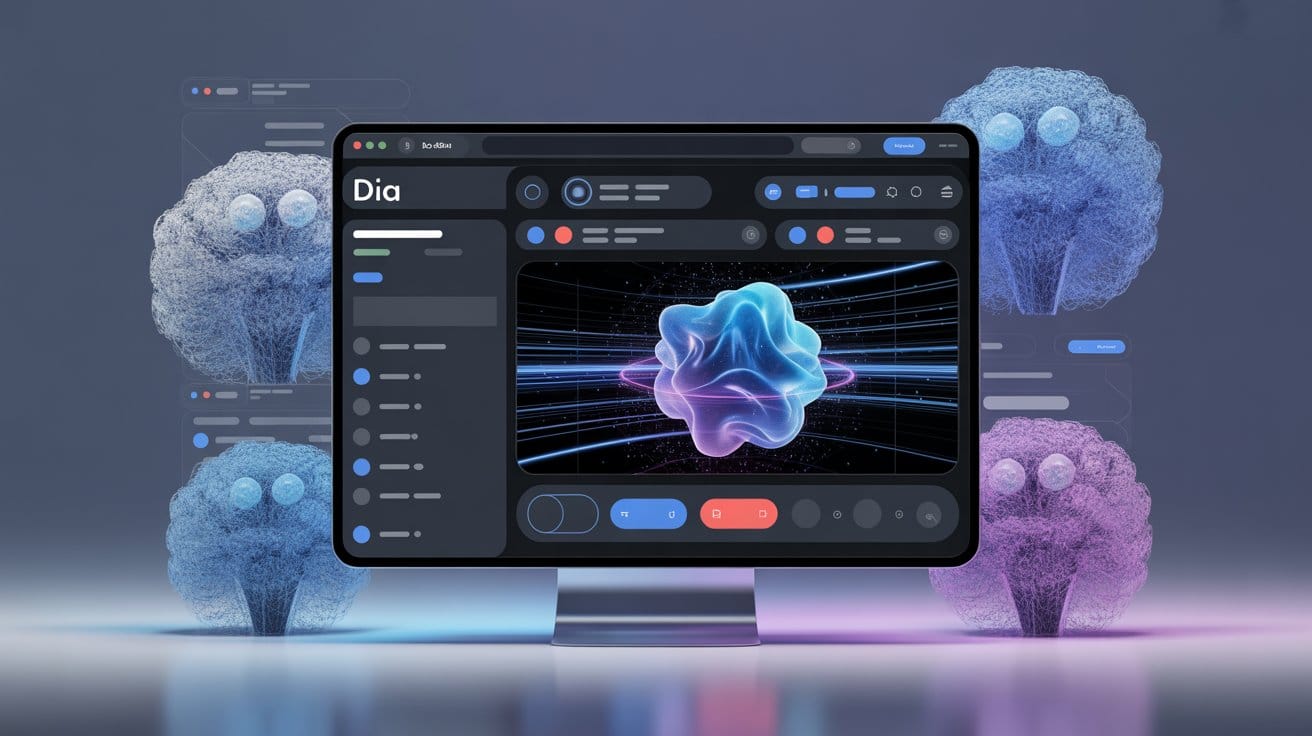
The browser wars are heating up again, and this time, artificial intelligence (AI) is the weapon of choice. The Browser Company, known for its innovative Arc Browser, is pivoting its resources toward developing a new AI-powered browser called Dia. This move has sparked speculation about the future of AI-native browsers and whether they can challenge Google Chrome's seemingly unshakable dominance. Let’s dive into this digital drama and see if AI browsers are the heroes we’ve been waiting for—or just another tech fad.
The Browser Company’s Bold Move: From Arc to Dia
The Browser Company, which gained attention with its experimental Arc Browser, has decided to shift gears. Arc, while innovative, was deemed too complex and niche for the average user. CEO Josh Miller admitted that Arc suffered from a "novelty tax," meaning it was too different and required too much effort to learn for too little reward. The company has since stopped adding new features to Arc and is considering selling or open-sourcing it.
Enter Dia, the AI-powered browser that promises to revolutionize web browsing. Scheduled for release in early 2025, Dia aims to integrate AI into the very fabric of the browsing experience. Forget about AI as just another app or button; Dia envisions AI as an entire environment built on top of a browser.
What Makes AI Browsers Like Dia Special?
Dia is not just a browser; it’s a digital Swiss Army knife. The Browser Company has teased features like AI-enhanced writing assistance, automatic tab summarization, and even the ability to perform complex tasks like shopping cart management or sending personalized emails. Imagine typing, "Find me a flight to Paris and book it," and your browser just does it. That’s the kind of magic Dia is promising.
Moreover, Dia is built on the Chromium engine, ensuring compatibility with most websites, but it uses the proprietary Arc Development Kit (ADK) for faster feature development. This dual approach could give Dia the edge it needs to compete with established players like Chrome.
The Current Browser Landscape: Chrome’s Iron Grip
Before we get too excited about Dia, let’s take a moment to appreciate the Goliath it’s up against: Google Chrome. As of 2025, Chrome holds a staggering 61.2% share of the global browser market. Safari comes in second with 19.4%, while Microsoft Edge trails at 6.8%. Chrome’s dominance is fueled by its integration with Google’s ecosystem, its speed, and its extensive library of extensions.
In regions like Asia-Pacific, Chrome’s market share is even higher, reaching 70.2%, thanks to Android’s dominance. In North America, it commands 58.3%, while in South America, it boasts a loyalty rate of 68.9%. Clearly, Chrome is not just a browser; it’s a way of life for millions.
Can AI Browsers Challenge Chrome?
As we delve deeper into the evolution of web browsing, the emergence of AI-driven browsers like Dia marks a significant shift in how users engage with the internet. Dia promises to enhance web browsing by integrating personalized AI tools, automating tasks, and providing real-time content summarization. These innovative features have the potential to save users considerable time and effort, making the browsing experience not only smarter but also more efficient.
In contrast to browsers like Arc, which primarily cater to power users, Dia aims to be inclusive and user-friendly. Its minimalist design combined with advanced AI capabilities is likely to resonate with a broader audience, inviting users who may have felt overwhelmed by more complex interfaces. This vision of incorporating AI as a fundamental aspect of the browsing experience could redefine our interactions with the web, setting Dia apart from traditional browsers.
Specifically, when we consider Google Chrome, we see a browser that, despite its efficiency, remains rooted in conventional design. Chrome's deep integration with Google services such as Gmail, Google Drive, and Google Docs creates an unparalleled level of convenience. This ecosystem, while beneficial, also highlights the challenges that new entrants like Dia face in gaining traction in a market dominated by well-established habits.
However, the rise of AI browsers is not without its complications. To function effectively, these innovative platforms will need to collect substantial amounts of user data, raising valid privacy concerns in an era where users are increasingly vigilant about data breaches and surveillance. As we navigate this delicate balance between innovation and privacy, it is crucial to consider how user trust can be built and maintained.
Moreover, Chrome's dominance is not solely a matter of superior features; it has become ingrained in user habits. Persuading individuals to switch from a familiar platform like Chrome, especially when it is the default browser on most Android devices, presents a formidable challenge. Thus, while Dia and similar AI browsers represent an exciting frontier in web browsing, they must also strategize effectively to encourage users to embrace this new way of interacting with the internet.
In conclusion, the landscape of web browsing is on the verge of transformation with the advent of AI-driven platforms. As these browsers strive to redefine user experiences, they must grapple with the complexities of data privacy, user habits, and the challenge of standing out in a crowded market. The journey ahead will be critical in shaping the future of how we navigate the digital world.
A Brave New World?
The rise of AI browsers like Dia represents a shift in how we think about web browsing. While traditional browsers focus on speed and compatibility, AI browsers aim to be intelligent assistants that anticipate our needs. This could lead to a more seamless and productive online experience.
However, the road ahead is fraught with challenges. Chrome’s dominance is not just a testament to its quality but also a reflection of its deep integration into our digital lives. For AI browsers to succeed, they will need to offer something truly revolutionary—something that makes users say, “I can’t live without this.”
So, can AI-native browsers like Dia dethrone Chrome? The answer is a cautious “maybe.” While Dia’s features sound promising, it’s too early to tell if they will resonate with users. The Browser Company has a bold vision, but it will need to execute flawlessly to make a dent in Chrome’s market share.
In the end, the success of AI browsers will depend on their ability to deliver on their promises without compromising user privacy or convenience. If they can do that, we might just be witnessing the dawn of a new era in web browsing. And if not? Well, at least we’ll have Chrome to fall back on.
If you thought the only thing hotter than the Arabian Peninsula was the summer sun, think again. There’s a new kind of heatwave sweeping the Gulf, and it’s powered by
In the ever-evolving world of artificial intelligence, where breakthroughs are as common as coffee breaks, Chinese AI lab DeepSeek has dropped a bombshell—or rather, a
The world of artificial intelligence (AI) is not just about algorithms, neural networks, and mind-bending computations. Behind every breakthrough is a team of brilliant engineers and
DeepSeek, the ambitious Chinese AI startup, has recently rolled out a "minor" upgrade to its R1 reasoning AI model, officially dubbed the DeepSeek-R1-0528. But
The browser wars are heating up again, and this time, artificial intelligence (AI) is the weapon of choice. The Browser Company, known for its innovative Arc
A clearer perspective. In your inbox.
Our free daily briefing on the technology, business, and people shaping AI.