
🛎️ The Monopoly Comes Home
Plus: Zero-Days Now Have a Price, Sutton Forgot the Recipe

Good Morning, AI Enthusiasts!
Ownership now lives in the plumbing beneath the headlines.
NEW TECH
The Monopoly Comes Home
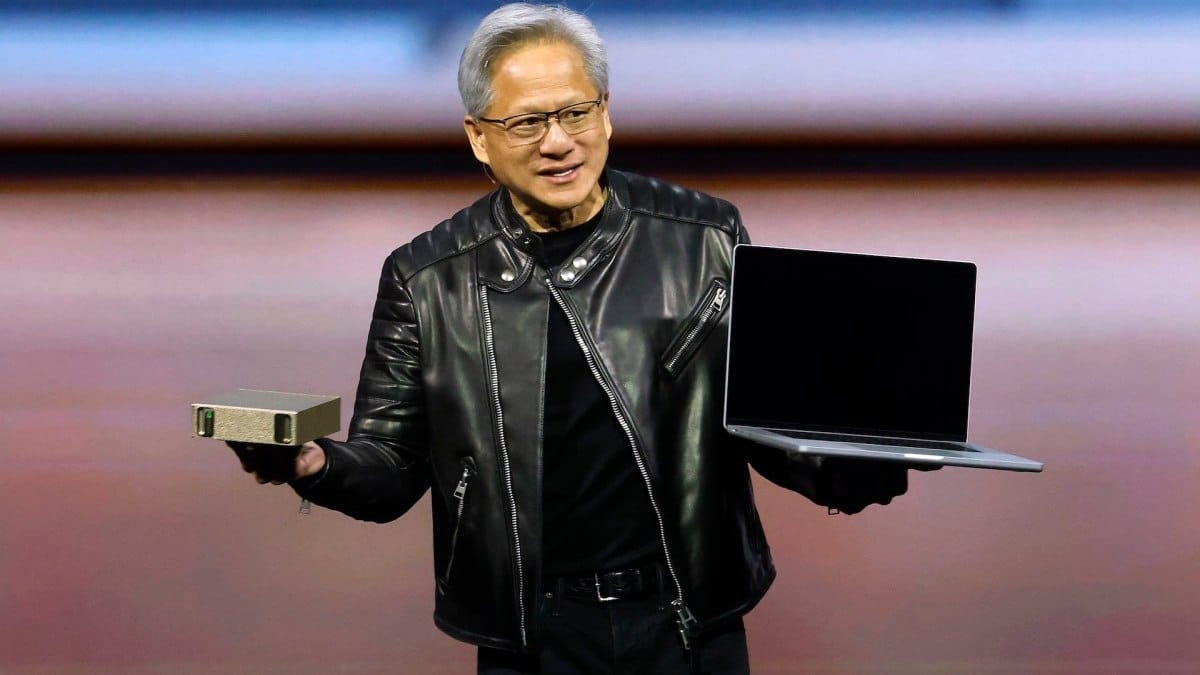
👀 What’s happening: At GTC Taipei 2026, Nvidia launched RTX Spark, a consumer chip on its GB10 part, calling it the PC's first redefinition in 40 years. The spec runs up to 1 PFLOP of FP4 compute and 128GB of unified memory, enough to run 120-billion-parameter models locally. Lenovo and HP are building machines, Microsoft will rebuild Windows around it, and Adobe is re-architecting Photoshop and Premiere.
🌍 How this hits reality: Local AI always forced a choice between two things you couldn't get together. One was CUDA, Nvidia's two-decade software moat that nearly every AI framework targets first, and it only ran on Nvidia hardware. The other was unified memory, a shared CPU-GPU memory pool big enough to fit a large model on one machine, which Apple had made mainstream and Nvidia's PC chips lacked. RTX Spark is the first to weld both together. Nvidia already owns the cloud layer every model trains on; now the desktop runs on the same stack. Keep going, and "local AI" just means Nvidia AI you happen to own.
🛎️ Key takeaway: The new PC era is the datacenter monopoly arriving on your desk, where every private, on-device future quietly runs on one vendor's stack.
STUDY
Sutton Forgot the Recipe
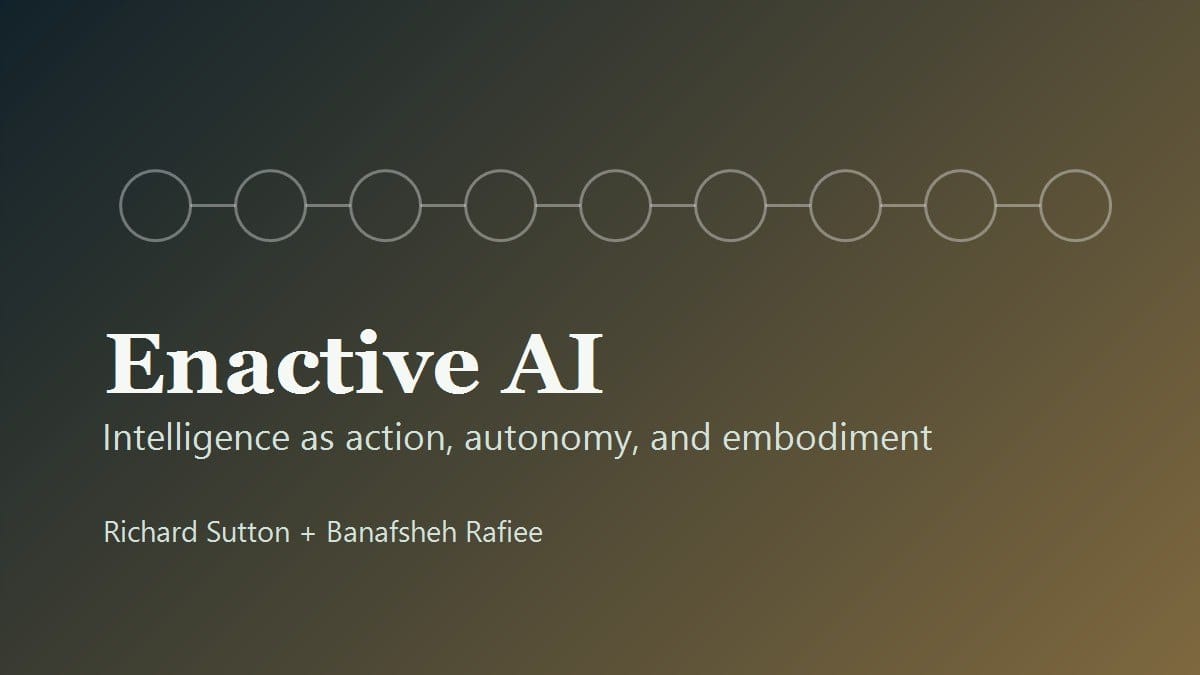
👀 What’s happening: Richard Sutton, the Turing Award winner called the father of reinforcement learning, and researcher Banafsheh Rafiee propose a different path in a new paper: enactive AI. Instead of a model that ingests data and predicts patterns, intelligence would emerge from an agent acting in an environment and learning from consequences. They name four pillars: real experience over labeled data, perception and action as one loop, autonomy, and embodiment. Reinforcement learning, they say, is the closest existing branch but still falls short on all three counts.
🌍 How this hits reality: The diagnosis is sharp; the prescription is mostly a wishlist. The hardest pillar is autonomy: a system that sets its own success criteria, not a reward function a human wrote. Nobody knows how to build that. Embodiment is worse, since an agent that learns by acting collects data at the speed of the physical world, while LLMs swallowed the internet in months. The paper says what is missing without saying how to make it.
🛎️ Key takeaway: Enactive AI may be the right description of real intelligence and still have no engineering road to it, a compass pointing at a country with no roads in.
SDK
Anthropic Buys Out the Standard
👀 What’s happening: Anthropic is buying Stainless, the tool hundreds of companies use to turn an API into ready-made SDKs and connectors. One of those companies is OpenAI, whose Python, Node, Go, and Ruby libraries are all generated by Stainless. The deal is reported above $300 million, and Anthropic doesn't plan to keep running it as a service. Stainless will shut its platform on September 1, 2026, leaving OpenAI and other rivals to maintain their own SDKs or scramble for a replacement.
🌍 How this hits reality: Anthropic proposed MCP, the standard for connecting models to tools, and gave it away free. Now it owns the toolchain that implements it. Give the standard, then own the build layer everyone depends on, the same move Google ran with Kubernetes before making GKE the default. SDKs are sticky, so whoever ships the cleanest one quietly wins developer mindshare. The frontier model isn't the moat anymore, the plumbing around it is.
🛎️ Key takeaway: When models commoditize, the fight moves below them, and Anthropic just bought the floor its rivals were standing on.
BUGS
Zero-Days Now Have a Price
👀 What’s happening: Palo Alto Networks, a top cybersecurity firm, was among the first to test Anthropic's unreleased Mythos model, and in three weeks it surfaced over 20 critical low-level vulnerabilities, roughly five times what traditional tools find. The cost: more than a million dollars in tokens, burned in weeks. Anthropic has priced Mythos at six times Opus 4.8, yet security chiefs say they'll pay. Palo Alto's stock is up over 50% since April.
🌍 How this hits reality: Finding a zero-day used to take experts months of reverse engineering. Mythos resets that to days at scale, and reprices it as raw compute: a mere million-dollar token bill instead of an uncertain payroll line. But the same blade cuts both ways: fast discovery doesn't stay with defenders, and attackers get the identical speedup. Skeptics note nobody has published the false-positive rate, the number that decides if this scales at all.
🛎️ Key takeaway: Every dollar spent finding your own holes faster just confirms the same model is finding them for everyone else, so this isn't a security budget, it's the entry fee to an arms race nobody can stop paying.
TOGETHER WITH MYCLAW
Your OpenClaw, Ready to Work
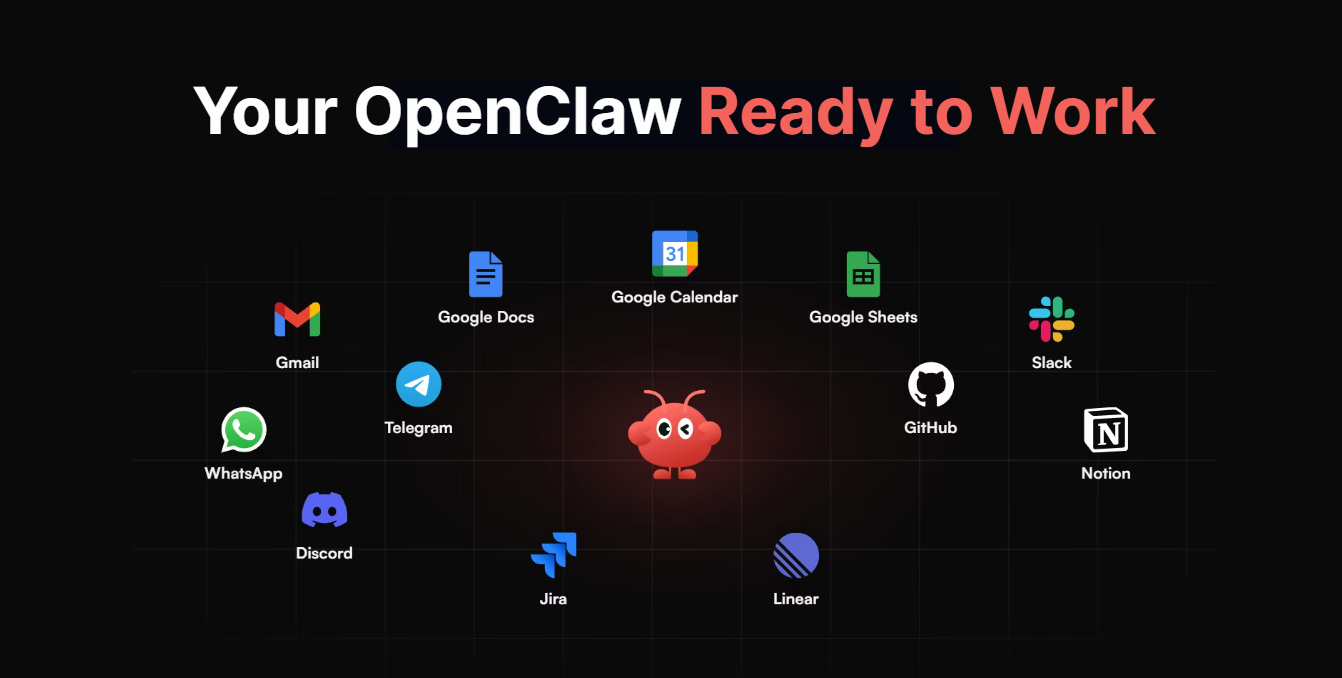
MyClaw makes OpenClaw instantly usable by connecting it to the SaaS tools you already use—Gmail, Slack, Google Docs, Sheets, Notion, GitHub, Telegram, WhatsApp, and more. No DevOps, no messy setup.
Just give it a goal, and your OpenClaw works 24/7 in the cloud, pulling context from your apps and delivering briefs, research, reports, decks, pages, and decisions ready to approve.
MyClaw turns OpenClaw from a cool demo into an always-on operator.
DAILY TL;DR
- Intel is backing a 36,864-core rack design aimed at agentic AI workloads.
- OpenAI launched new Codex tools for white-collar work, pushing coding agents beyond software teams.
- North Korea is targeting open-source maintainers, turning AI-era software supply chains into a national-security problem.
- Uber capped employee AI spending after burning through its budget in four months.
- Microsoft launched text-based AI behavior tests so developers can evaluate agents before deployment.
- Google rolled out fake-call detection to protect users from AI deepfake impersonation scams.
- Amazon Ring faces a class-action fight over facial recognition, keeping consumer AI privacy in court.
READ MORE
Let the Future Come to Your Inbox
Stay ahead without drowning in information. We turn the most important signals across AI, tech, marketing, and future products into 5-minute reads you can actually finish.
- AI Secret uncovers what really matters in AI
- Bay Area Letters decodes tech and business shifts from Silicon Valley
- Robotics Herald tracks how robots move from labs into daily life
- Marketing Secret breaks down real growth and go-to-market playbooks
- The Hardwire explores hardware, consumer tech, and what’s coming next
TOGETHER WITH US
AI Secret Media Group is the world’s #1 AI & Tech Newsletter Group, reaching over 2 million leaders across the global innovation ecosystem, from OpenAI, Anthropic, Google, and Microsoft to top AI labs, VCs, and fast-growing startups.
We've helped promote over 500 Tech Brands. Will yours be the next?
Email our co-founder Mark directly at mark@aisecret.us if the button fails.