
🛎️ The In-House Model Fever
Plus: Mind Reading Went Non-Invasive, Animation Gets Cut First

Good Morning, AI Enthusiasts!
Who owns the model, the data, the workflow, the medical record, and eventually the signal inside your head?
LLM
The In-House Model Fever
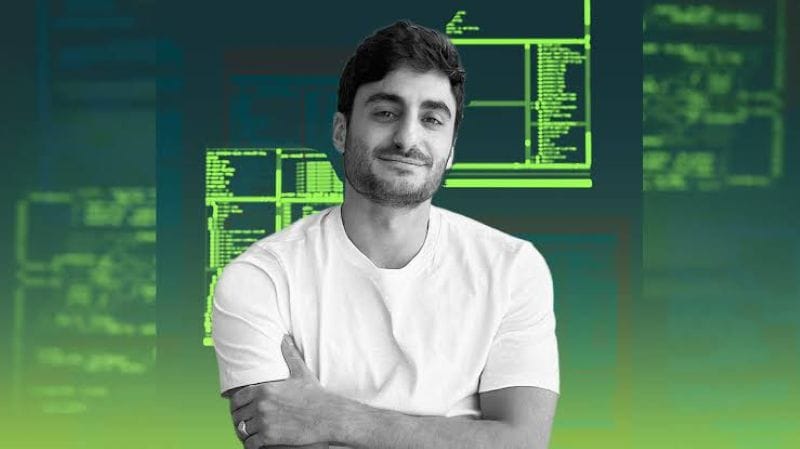
👀 What’s happening: Base44, the app-building platform Wix bought for $80 million last year, just put its first proprietary model, Base One, into production. It is a fine-tuned open-source base trained on tens of millions of real user interactions, and founder Maor Shlomo bets a narrow, specialized model will beat general frontier models at building apps. It is not alone. MyClaw.ai, one of the leading agent-hosting platforms, told us it will soon ship its own in-house model. A fever is setting in: the companies built on top of frontier models now all want one of their own.
🌍 How this hits reality: Building on rented intelligence was the entire playbook, until the rent and the risk both climbed. Inference costs eat real margin, and the model providers are walking into their customers' markets themselves. So owning a model is turning from luxury into table stakes. Cursor moved first, Base44 and myclaw are following, and Shlomo expects every player with enough scale and data to do the same. The fever is rational: each one is trying to own the layer it cannot afford to keep renting. The math also points straight at Lovable, the $500 million category leader, next.
🛎️ Key takeaway: When an entire category rushes to build the engine it used to buy, the real signal is that renting the core was never a moat, just a lease nobody noticed was running out.
NEW TECH
Mind Reading Went Non-Invasive
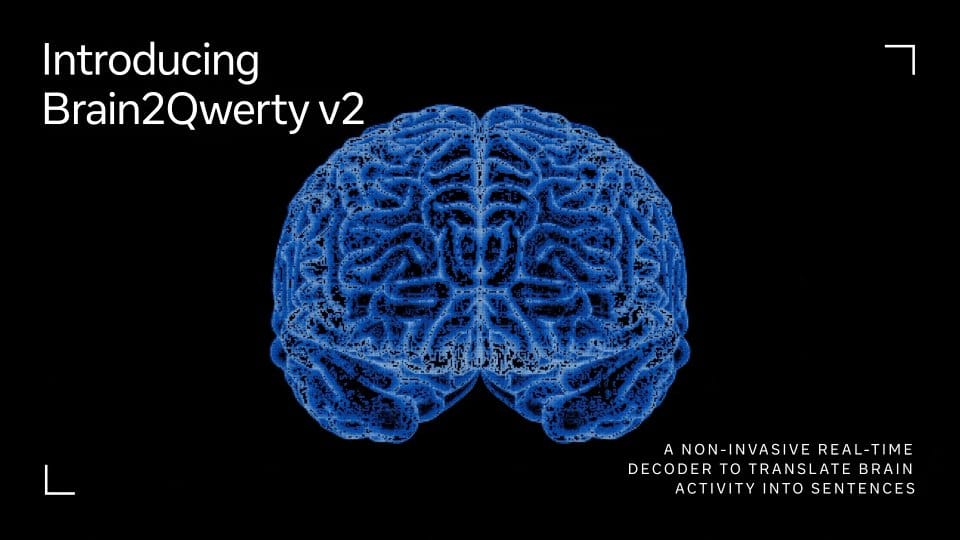
👀 What’s happening: Meta released Brain2Qwerty v2, an AI decoder that reads typed sentences straight out of brain activity. No implant. No surgery. Trained on 22,000 sentences from nine volunteers wearing the scanner ten hours each, It hits 61% word accuracy, 78% on the best subject, where most sentences return with one wrong word or none. The prior non-invasive ceiling was 8%. Meta open-sourced the code.
🌍 How this hits reality: Reading the brain this well used to demand surgery. Invasive BCIs like Neuralink put electrodes directly on cortex, which buys clean signal but needs a craniotomy, an implant, and a patient willing to undergo both. Brain2Qwerty reads from a scanner you wear, and accuracy climbs log-linearly with data, so the surgical lead narrows with recording hours instead of operations. The clarity that justified cutting into a skull is arriving without the cut.
🛎️ Key takeaway: For a decade the price of letting a machine read your mind was brain surgery, and Meta just showed that price was never really about the brain, only about the data we hadn't collected yet.
ANIMATION
Animation Gets Cut First
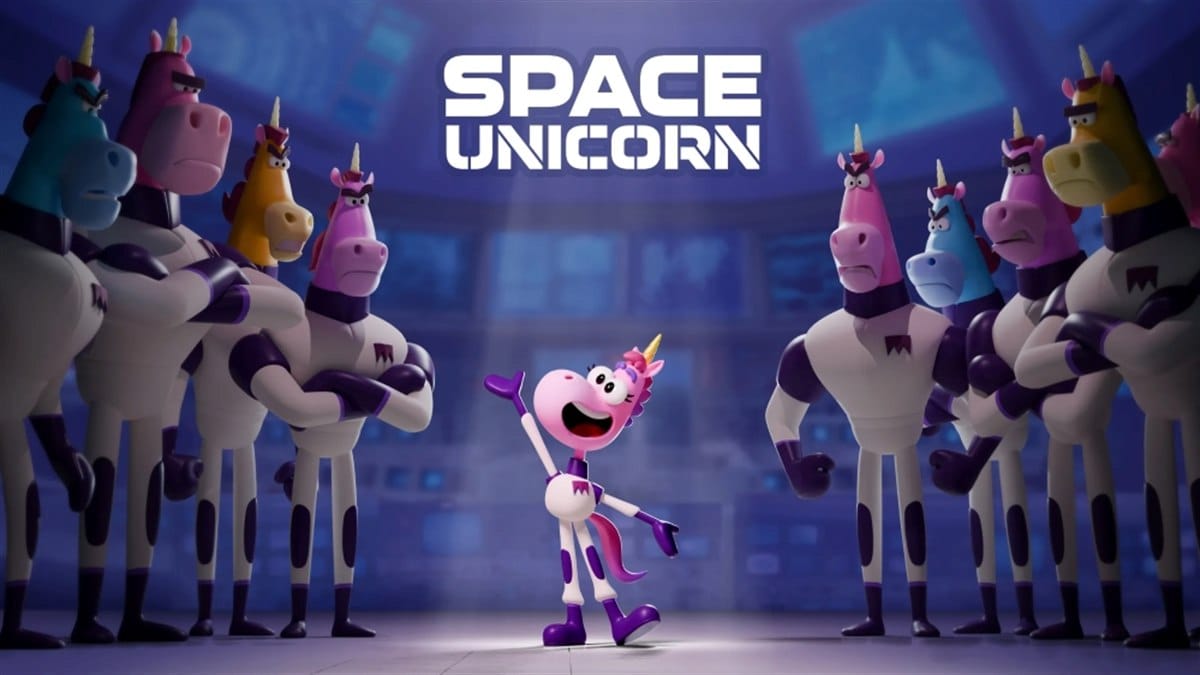
👀 What’s happening: According to Bloomberg, Animation is the first corner of Hollywood where AI is cutting real production, not just marketing. Spiridellis Bros, a Google-backed studio, says it can finish a feature called Space Unicorn with 40 animators for $15 million, against the $100 to $200 million a major studio spends. Producers showed up at Cannes and Tribeca touting AI-made films, hunting money and distribution. Two Pixar veterans left for Google's DeepMind to make theirs. Cost-savings estimates run from 30% all the way to 90%.
🌍 How this hits reality: The last animation revolution grew the industry. When Pixar brought computer-generated 3D, traditional animators called it less human, then Toy Story launched two decades of Pixar and DreamWorks hits and thousands of jobs. This wave may run the tape backward. Jeffrey Katzenberg, who greenlit that first shift, now pegs AI at 90% cheaper with a lot of jobs gone. A $200 million crew becomes a $15 million one not by drawing faster but by needing fewer hands. The craft isn't getting a new tool. It's getting a smaller payroll.
🛎️ Key takeaway: Animation won't get changed because people stop watching it, but because making it will no longer require an industry to exist at all.
BILL
Your Medical Records Went to a Chatbot

👀 What’s happening: Senator Elizabeth Warren and Representative Mary Gay Scanlon are reviving the Health and Location Data Protection Act, rewritten for the AI era. The original 2022 bill blocked data brokers from selling health and location data. The new version bans companies from selling that data to brokers at all, and explicitly covers anything users type into AI systems like ChatGPT or Claude. It hands the FTC 180 days to write rules, $1 billion over ten years to enforce, and lets states and individuals sue. Backers include Ron Wyden and Bernie Sanders.
🌍 How this hits reality: The bill chases a door the labs already walked through. In January, Elon Musk urged people to upload MRI scans to Grok, OpenAI launched ChatGPT Health for medical records, and Anthropic shipped a HIPAA-ready Claude for Healthcare days later. They are actively soliciting the most sensitive data a person has. Yet protection rests almost entirely on each company's own privacy policy, because the US still has no federal data privacy framework. The product shipped first, and the guardrail is arriving years behind it.
🛎️ Key takeaway: AI companies spent a year convincing people to hand over their medical records, and lawmakers are only now asking the obvious question of who else gets to buy them.
TOGETHER WITH MYCLAW
Run Best-in-Class AI Agents — In Seconds, Always On

MyClaw is a best-in-class AI agent platform that brings together OpenClaw, Hermes Agent, and commercial infrastructure to help businesses launch intelligent agents that understand goals, use tools, automate workflows, and deliver finished results.
We already host OpenClaw and Hermes — and we're just getting started. Claude Code, Codex, and every agent worth running are coming next. One home for all of them, always on.
Stop babysitting infrastructure. Spin up your agent, walk away, and let it work around the clock.
MyClaw — Your Agents, Hosted Right.
DAILY TL;DR
- Anthropic struck a deal with California to give state agencies Claude at half price, pushing frontier AI deeper into government workflows.
- Gemini made personalized AI image generation free for U.S. users, bringing custom image models closer to mainstream use.
- South Korea plans a $1T push into memory chips and humanoid robots, treating AI hardware as national infrastructure.
- Adobe and Disney are using Foundry AI to design next-generation theme park rides.
- Meta is testing CXL tech to reuse DDR4 memory, trying to dodge the exploding AI memory bill.
- OpenAI signed a high-risk AI evaluation agreement with Korea’s AI Safety Institute.
- Google added new AI controls across Classroom and Chromebooks, giving schools more control over student AI use.
READ MORE
Let the Future Come to Your Inbox
Stay ahead without drowning in information. We turn the most important signals across AI, tech, marketing, and future products into 5-minute reads you can actually finish.
- AI Secret uncovers what really matters in AI
- Bay Area Letters decodes tech and business shifts from Silicon Valley
- Robotics Herald tracks how robots move from labs into daily life
- Marketing Secret breaks down real growth and go-to-market playbooks
- The Hardwire explores hardware, consumer tech, and what’s coming next
TOGETHER WITH US
AI Secret Media Group is the world’s #1 AI & Tech Newsletter Group, reaching over 2 million leaders across the global innovation ecosystem, from OpenAI, Anthropic, Google, and Microsoft to top AI labs, VCs, and fast-growing startups.
We've helped promote over 500 Tech Brands. Will yours be the next?
Email our co-founder Mark directly at mark@aisecret.us if the button fails.